The safest payment terms when importing from China are a deposit small enough to lose, plus a balance released only after an inspection report and a copy of the bill of lading exist. A 30% deposit / 70% balance structure does that for most orders. Paying 100% upfront to a supplier you have not verified is the single most expensive habit in importing.
In this guide
- The four structures, and who carries the risk
- T/T: what the 30/70 split actually protects
- L/C: the strongest instrument, and what it costs
- D/P and open account: where the exposure moves
- The fraud that costs more than any price negotiation
- How to verify a supplier’s bank account
- Tie the balance payment to an inspection
- Key takeaways on payment terms when importing from China
- Where SourceEyes helps: the China half
- Frequently asked questions
The four structures, and who carries the risk
Every payment terms when importing from China decision moves risk between you and the factory. There is no arrangement that removes it from both sides, so the useful question is not “which method is safest” but “which method matches this order, this supplier and this amount”.
| Structure | Credit behind it | Risk to buyer | Typical lead time | Used for |
|---|---|---|---|---|
| T/T, 100% advance | Commercial | Very high | 2–5 days | Samples, very small orders, first contact |
| T/T, 30% deposit / 70% balance | Commercial | Medium | 2–5 days | The mainstream for small and mid-size orders |
| L/C at sight | Bank | Low | 10–20 days | Large orders, new suppliers, exchange-control markets |
| D/P at sight | Bank (documents only) | Medium | 7–14 days | Established relationships, no L/C budget |
| O/A (open account, 30–90 days) | Commercial | Very low | 30–90 days | Verified long-term partners only |
More than nine in ten Chinese suppliers prefer T/T, which is why it dominates payment terms when importing from China in practice: the money routes through the SWIFT network and costs the factory almost nothing. Every row in that table is a set of payment terms when importing from China a supplier will recognise, and each one shifts the risk somewhere else. That preference is not a red flag — but it does mean the buyer has to build the protection into the payment schedule rather than relying on the instrument.
T/T: what the 30/70 split actually protects
The standard payment terms when importing from China for a small or mid-size order are a 30% deposit on order confirmation, with the 70% balance released before shipment. The deposit is not a courtesy: it covers the factory’s raw-material cost, which is why a supplier who has received it can start production without financing you.
What the buyer gets in return is leverage, and the standard payment terms when importing from China release the balance only when two conditions are met at the same time:
- The goods have passed a pre-shipment inspection, documented in writing rather than confirmed by a photograph on a chat app
- The supplier has presented a copy of the bill of lading, proving the container is actually loaded and on its way
Variations exist, and knowing them tells you when proposed payment terms when importing from China shift risk back to you:
- 100% advance is normal for samples and very small orders, where the administration costs more than the risk. It is not normal for a production order of any size.
- 20% deposit, or T/T against a copy of the bill of lading (no deposit), is sometimes offered to buyers with a long payment record. It is a concession earned over time, not a starting position.
- Payment after arrival puts the entire risk on the supplier. Expect a higher price, or a refusal, and read that refusal as normal rather than as bad faith.
Two costs belong in any plan for payment terms when importing from China: a wire typically costs $20–50 in bank fees per transfer, and if you split an order across several factories those fixed fees multiply. That is one reason consolidation is worth considering once you are ordering from four or five suppliers. The payment rails themselves — the messaging and settlement systems behind every wire — are monitored internationally by the Bank for International Settlements.
L/C: the strongest instrument, and what it costs
A letter of credit replaces the factory’s promise with a bank’s promise. The bank releases payment only against documents that match the credit terms exactly — which is why an L/C is the standard answer for payment terms when importing from China on a large first order, or with a supplier in a market where the factory’s bank is better known than the factory.
The mechanism is strict by design, and that strictness has two consequences buyers underestimate:
Documents are examined, not goods. A bank holding a credit for payment terms when importing from China pays against paper. If the bill of lading says “Shanghai” and the credit requires “Shanghai Port”, that discrepancy can stop payment even when the container is already afloat and correct. Buyers should have the draft credit reviewed against the sales contract before it is issued, and check the required document list against what the supplier can actually produce.
It is not free. Bank charges typically run 0.5–1.5% of the credit value, and the timeline stretches: 10–20 days from presentation to settlement is normal. On a $60,000 order that is a real cost, which is why an L/C is usually reserved for larger orders — commonly above $50,000 — rather than applied to every set of payment terms when importing from China.
The rules that govern documentary credits are maintained by the International Chamber of Commerce, which is worth reading before agreeing to payment terms when importing from China that contain clauses you do not recognise.
D/P and open account: where the exposure moves
Documents against payment (D/P) sits between the two, and it is the least understood option in payment terms when importing from China. The bank hands over the shipping documents only when the buyer pays, so the goods cannot be collected without settlement. It is cheaper than an L/C because there is no credit to issue. The weakness is what happens if the buyer changes its mind: the goods are already at the destination port, and storage, re-sale or return freight becomes a cost someone has to absorb. That is why D/P is a stepping stone rather than a destination.
Open account inverts everything: the supplier ships first and invoices for payment in 30, 60 or 90 days. For payment terms when importing from China, open account is the most comfortable position a buyer can hold and the most dangerous one a supplier can accept. It is realistic only with a long, verified trading history — and even then, the supplier is carrying your credit risk, so the price usually reflects it.
The fraud that costs more than any price negotiation
The largest single loss most importers face is not a bad batch or a slow factory. It is a payment sent to the wrong bank account — which is why payment terms when importing from China is a fraud-control question before it is a financing question.
The pattern is consistent, and it is the reason payment terms when importing from China deserves more attention than the price negotiation. You agree terms, approve a sample, receive the proforma invoice — and then, shortly before the deposit is due, an email arrives from the supplier’s address explaining that the company has changed banks. The message is well written, references your order number, and asks you to update your records. Sometimes the genuine supplier’s mailbox has been compromised, so the reply comes from the real thread. Sometimes the whole domain is a near-identical copy.
Business email compromise is the dominant fraud pattern in cross-border trade payments, and the FBI’s Internet Crime Complaint Center documents how it works and how to report it. What makes it effective is timing: the request arrives in the window where a buyer is most committed and least willing to delay production.
Three rules defuse it, and none of them depends on how convincing the email looks — they apply to every set of payment terms when importing from China:
- A change of bank details is never actioned from the message that announced it. Suspend the payment, then confirm by voice on a number you already had — not the number in the email.
- The beneficiary must match the contracting entity. A legitimate supplier banks in the name of its registered company. A request to pay an individual, a “finance manager” or an unrelated company is a reason to stop, not a detail to accommodate.
- Payment structure limits the blast radius. A buyer who wires 70% of $60,000 in one transfer has made a single large bet on the authenticity of one instruction. Splitting the money across a deposit, a document-linked payment and a retention converts one bet into three, two of which can still be stopped. That is a payment terms when importing from China decision, not a banking one.
How to verify a supplier’s bank account
Verification is routine hygiene, and professional suppliers expect it as part of normal payment terms when importing from China. Do it in this order, and record what you did — if a payment goes wrong, the record is your evidence of a reasonable process.
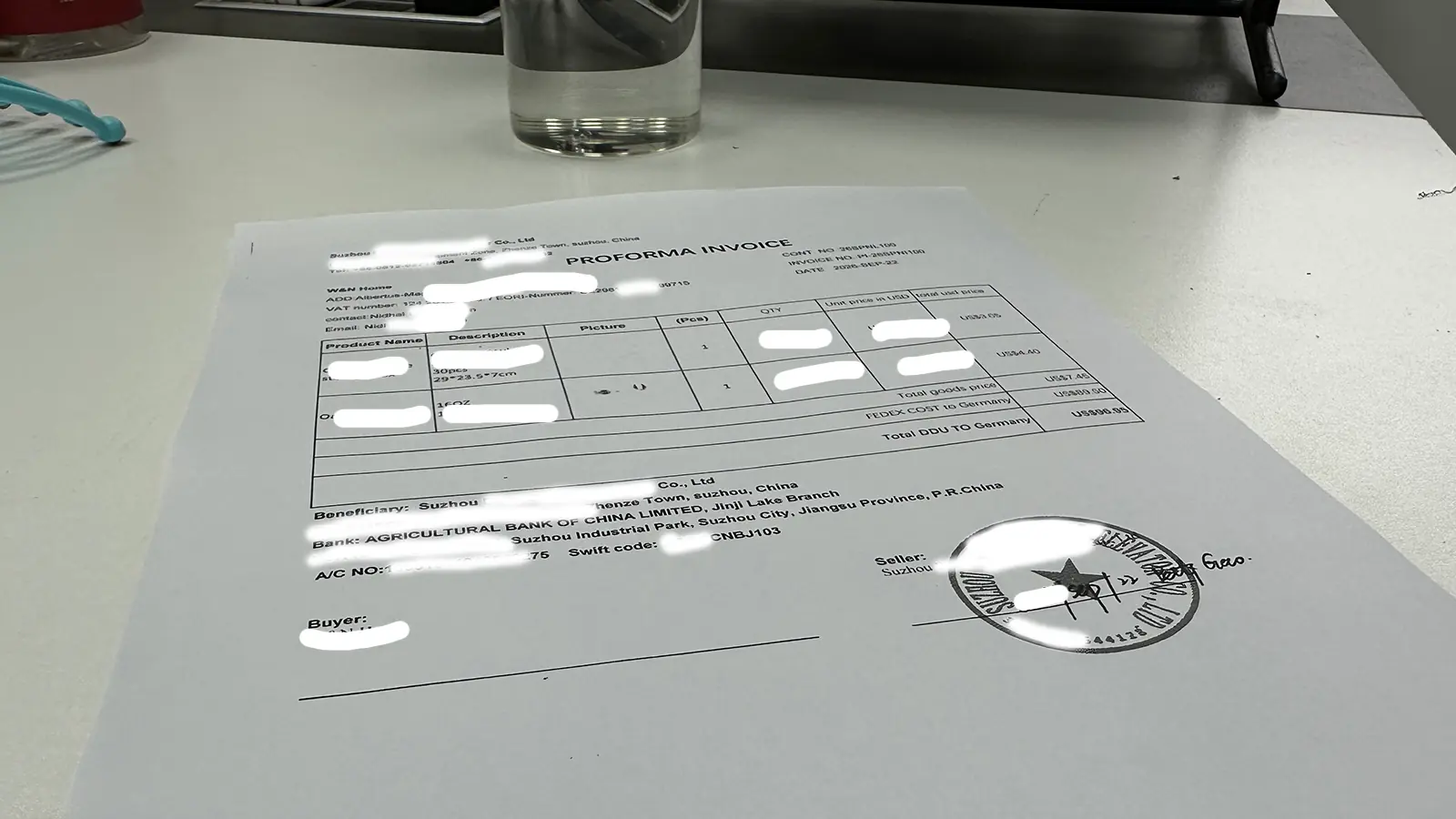
- Request the bank details on company letterhead, with the signature and company stamp. Never wire on the strength of text in an email or a chat message.
- Compare the beneficiary name character by character with the legal name on the business licence. “Shenzhen Xingyuan Trading Co., Ltd.” and “Shenzhen Xingyuan Trade Co. Ltd.” are not the same payee, and a small mismatch is the most common tell. It is the highest-value minute in payment terms when importing from China.
- Check the bank itself. Confirm the SWIFT/BIC code resolves to the bank named on the invoice, and that the branch location is consistent with the supplier’s city. A Shenzhen supplier invoicing through a branch in a distant province deserves a question.
- Confirm on a second channel. Read the beneficiary name, account number, bank and SWIFT code back to a person at the supplier by phone or video — using a contact established before this payment, not one supplied in the instructions under review.
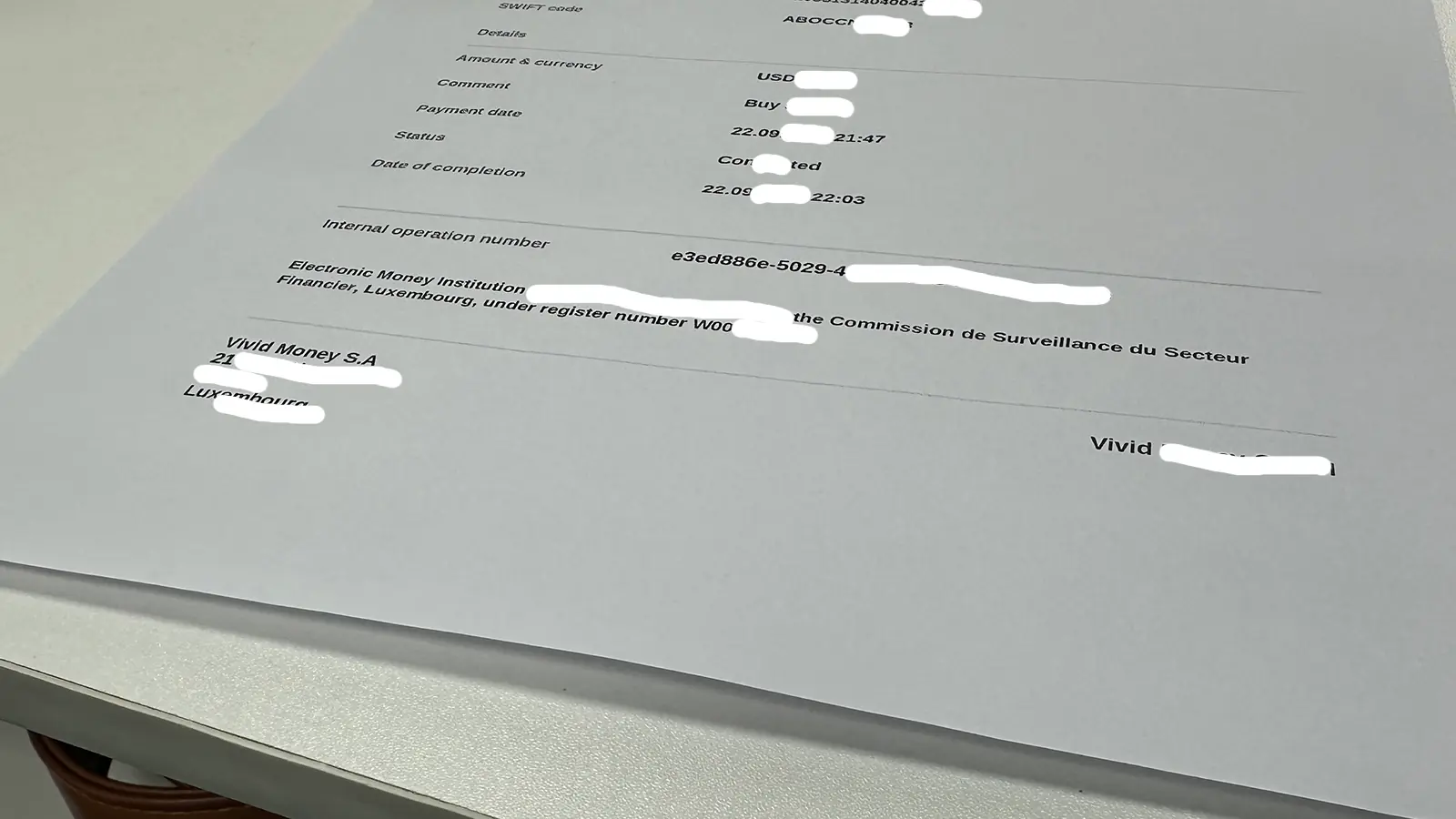
- Send a small test transfer first on a large balance payment, and ask the supplier to confirm the amount, currency and date received. It costs one wire fee and one day, and it proves the account exists and can receive foreign currency.
- Cap the exposure. Set an internal ceiling per payment — many mid-market importers use $15,000–$25,000 — and split anything larger. The ceiling is not about trust; it is about how much you can afford to be wrong once. Payment terms when importing from China built on three smaller payments are safer than one large one.
Some legitimate variations in payment terms when importing from China deserve a note rather than an assumption. A factory may route export proceeds through a trading affiliate or an offshore entity, and that can be a genuine group arrangement. If that is the structure, establish in writing which entity signs the contract, which one invoices, which one is exporter of record, and which one owes a refund if the goods fail. Common branding is not proof of authority.
Two payment routes are never worth the risk, whatever the explanation: cash-pickup services such as Western Union or MoneyGram, which are unrecoverable by design, and any transfer to a personal account.
Tie the balance payment to an inspection
The most useful structural idea in payment terms when importing from China is that fraud control and quality leverage are the same discipline. The payment schedule that protects you from a stolen deposit is also the schedule that protects you from a bad batch, because both work by keeping part of the money on your side of the transaction until something verifiable has happened.
That is why the balance milestone should be anchored to evidence rather than to a date — the rule that makes payment terms when importing from China workable:
- Deposit on order confirmation — this is the money you can afford to lose, so size it accordingly
- Balance on a passed pre-shipment inspection plus a copy of the bill of lading — you are paying for goods that exist, meet the specification, and are on board
- Retention on arrival, for larger or repeated orders — held against short shipment, wrong configuration or a documentation failure rather than against opinion
A structured inspection produces exactly the evidence this schedule needs: quantities counted against the packing list, workmanship checked against the approved sample, and the document data that your bank and your customs broker will also compare. The pre-shipment inspection checklist sets out what should be in such a report.
Two details are worth fixing at contract stage, while payment terms when importing from China are still negotiable. First, write the schedule and the release conditions into the proforma invoice and the sales contract, not into a chat history — a milestone that exists only in messages is not a milestone. Second, make sure the form of payment matches the invoice entity: the bank details, the beneficiary name and the invoice must all point at the same company, because a mismatch between them is the exact shape of a fraud attempt.
Key takeaways on payment terms when importing from China
- Size the deposit as money you can afford to lose, then release the balance against an inspection report and a copy of the bill of lading rather than a calendar date — the backbone of workable payment terms when importing from China.
- Match the instrument to the order. T/T with a 30/70 split for small and mid-size orders, an L/C above roughly $50,000, and open account only with a long verified history.
- Treat a change of bank details as a stop signal, and confirm it by voice on a number you held before the order.
- No personal accounts and no cash-pickup transfers — either one breaks the link between your payment and the company that owes you goods.
Where SourceEyes helps: the China half
SourceEyes is a sourcing and QC team based in Suzhou, China. SourceEyes works the China side of the import programme, in every market its buyers sell into: verifying that the supplier is a real factory, agreeing the specification that the payment milestones hang off, and inspecting the goods before they are loaded — from finding the right factory to loading your goods on board, which is where the SourceEyes scope ends. Payment terms when importing from China sit on your side of that line; SourceEyes supplies the evidence they run on.
SourceEyes does not hold funds, act as an escrow or guarantee a supplier’s payment. Buyers pay factories directly. What SourceEyes provides is the evidence that makes a payment schedule workable: a written inspection report with photographs, quantities reconciled against the packing list, and document data checked for consistency before the balance is released.
SourceEyes supplies 3 pieces of evidence that make a payment schedule workable: a written inspection report with photographs, quantities reconciled against the packing list, and document data checked for consistency before the balance is released.
On the supplier side, verification is where the leverage sits. SourceEyes checks a factory’s registration and manufacturing scope rather than a branding, confirm claimed certifications with the issuing bodies where possible, and flag the structural facts buyers cannot see from abroad — for example, when the export account belongs to a trading company rather than to the factory that makes the goods. That single detail changes who signs the contract, who invoices, and who owes the refund.
Leown Zhang runs inspections, Quinn Sun handles supplier research and logistics coordination, and Betty Gao takes the commercial side, and every report is written from the factory floor. See what that covers on the SourceEyes services page or check indicative fees on pricing.
If you are still comparing payment terms when importing from China across suppliers, the leverage comes from the same place — verified facts about the factory. Buyers who want the full picture can read how the SourceEyes process works and what an independent third-party sourcing agent actually does; buyers comparing markets can start with the SourceEyes Thailand import guide or the import cost calculator.
Tell us the product, the order value and the payment terms the supplier proposed — and SourceEyes will tell you where the structure leaves you exposed. Contact us and a real person replies within 24 hours.
Frequently asked questions
What payment terms when importing from China should I ask for as a new buyer?
Start with 30% deposit by T/T and 70% balance released against a passed pre-shipment inspection plus a copy of the bill of lading. It is the standard structure for small and mid-size orders, and suppliers rarely refuse it from a first-time buyer.
Is a letter of credit safer than a wire transfer?
For large orders with a new supplier, yes — the bank pays against documents rather than against the factory’s promise. It costs roughly 0.5–1.5% of the credit value and takes 10–20 days, and a single document discrepancy can stop payment, so the draft should be checked against the contract before issue.
Can I pay a Chinese supplier’s personal bank account?
No. Paying an individual breaks the legal link between your payment and the company that owes you goods, and it is one of the clearest fraud signals in trade. Legitimate exporters receive payment into a corporate account held in the company’s registered name.
What should I do if the supplier emails to change their bank details?
Suspend the payment and do not reply in the same thread. Confirm the change by phone or video using a number you already had, request it on company letterhead with a stamp and signature, and send a small test transfer before releasing the balance.
How much should the deposit be in payment terms when importing from China?
For most orders, 30% is standard and sufficient to cover the factory’s raw-material cost. Size it as money you could lose without ending the project — the deposit exists to start production, not to demonstrate commitment, and any pressure to raise it above the norm is worth questioning.