Most buyers come to electronics sourcing from China expecting a price problem. It is not one. Two suppliers quoting the same product, the same volume and the same delivery window are usually quoting the same factory cost — and the deal you regret is rarely the expensive one. It is the cheap one that fails a compliance check, gets held at the port, or comes back as returns.
This guide to electronics sourcing from China covers where the manufacturing actually sits, what drives the price, real MOQ and tooling expectations, the certification stack per market, and the six checks worth running before a deposit moves.
In this guide
- Electronics is a compliance business
- Where the supply actually sits
- What drives the price
- MOQs and the three sourcing tiers
- Certification by market
- Batteries: the part that stops shipments
- Electronics sourcing from China: 6 checks before you pay
- One legitimate duty lever: shipping parts, not products
- Electronics sourcing from China: questions buyers ask
- Where a local team changes the picture
Electronics is a compliance business
In electronics sourcing from China, an unbranded cable and a wireless earbud leave the same city but do not face the same rules. Electronics carries three layers of obligation that most first-time buyers discover late:
- Market access — CE or UKCA in Europe, FCC rules in the United States, PSE in Japan, KC in Korea, RCM in Australia, CCC for the Chinese domestic market.
- Safety and materials — RoHS substance limits, REACH in the EU, UL or equivalent for many retailers, Proposition 65 in California.
- Transport — anything with a lithium battery is Class 9 dangerous goods, with documents to match.
The practical consequence for electronics sourcing from China: the price difference between two “identical” products is often the difference in which of these three layers the supplier has actually paid for.
Where the supply actually sits
The first thing to learn in electronics sourcing from China is that the chain is regional, and the region tells you what a factory is genuinely good at:
- Shenzhen and Dongguan (Guangdong) — PCBA, SMT assembly, audio, wearables, chargers, power banks. The deepest component market in the world, and the fastest place to build a new design.
- Zhongshan and Foshan — small domestic appliances, lighting, kitchen electronics.
- Ningbo and the Yangtze River Delta — appliances, power tools, electrical components, and a strong export-documentation culture.
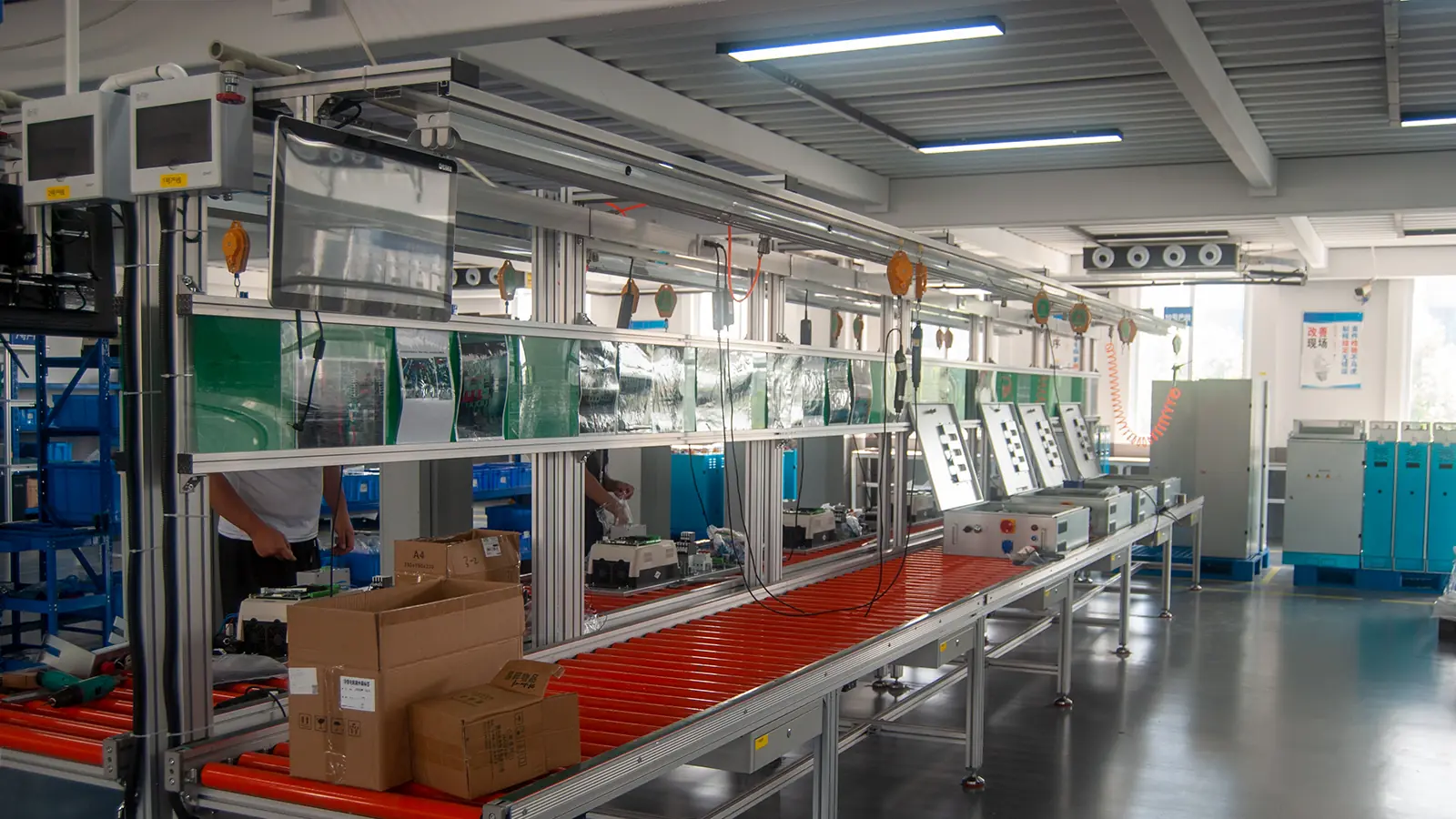
Two verification habits matter in electronics sourcing from China, and both are cheap to run. First, check that the business licence scope covers production, not only “sales and trade”. Second, look for the equipment: an SMT line, injection moulding, an assembly floor. A supplier who will not show you the workshop is the clearest red flag in this category. The factory vetting checklist from SourceEyes covers the twelve points checked in person.
What drives the price
In electronics sourcing from China, ask for the cost structure and you will usually get five lines: cells or core components, PCB and components, enclosure and tooling, labour and assembly, and certification and packaging. The levers that actually move:
- Cell grade. The biggest hidden variable in electronics sourcing from China: Grade A cells with a protection board versus under-specification cells is the single biggest hidden variable in battery products — and the most common substitution.
- Board quality and coating. Conformal coating, component brand substitution, and EMI design show up as field failures rather than at inspection.
- Certification. CE, FCC and UL testing is a real cost line, per model. A supplier quoting a price with “certification available on request” has not paid it.
- Tooling. Unique enclosures mean a mould: expect around 25–40 days before the first unit, plus amortisation across your volume.
- Packaging and shipping. Retail packaging weight and battery documentation are frequently underestimated.
MOQs and the three sourcing tiers
- Private label — your logo and packaging on a stock product. Lowest MOQ, usually a few hundred to a few thousand units, and the realistic starting point for a first order.
- OEM — the factory builds an existing design carrying your brand. Higher volume, specification control, moderate tooling.
- ODM — you commission the design and tooling. Highest MOQ and lead time; go here when volumes justify the mould.
MOQ is where most electronics sourcing from China projects actually begin. A supplier who will not move on unit price will often move on MOQ, and a lower MOQ is frequently the better deal on a first order — less cash tied up, less risk. The tactics in the SourceEyes guide to getting a good price from Chinese suppliers apply directly here.
SourceEyes treats 2 documents as the gate on an electronics order: the business licence scope covering production, and a certificate number verified on the issuing body database. Neither is accepted as a PDF forwarded on a chat app.
Certification by market
| Market | Required | Covers | Notes |
|---|---|---|---|
| EU / EEA | CE marking, RoHS, REACH | LVD, EMC, RED for wireless | Declaration of Conformity with the applicable directives |
| United Kingdom | UKCA | Safety, EMC, RF | CE alone is not sufficient for the UK market |
| United States | FCC rules (47 CFR Part 15) | EMC and RF emissions | UL is voluntary but expected by retailers; California adds Prop 65 |
| Japan / Korea | PSE / KC | Electrical safety, EMC | Local standards and filing |
| Australia / NZ | RCM | Safety, EMC, energy | Single mark across both markets |
| China (domestic) | CCC | Compulsory categories | e.g. CCC for power banks |
For any electronics sourcing from China project selling into more than one market, plan the certificates as a set. The US equipment-authorisation rules are published in the eCFR, 47 CFR Part 15; the EU environmental approach is set out in the EU batteries regulation.
Two non-negotiable habits: the certificate number must be verifiable on the issuing body’s own database, and the model designation on the certificate must match the invoice, packing list and the goods. Mismatched model numbers are a common cause of port holds and rejections.
Batteries: the part that stops shipments
In electronics sourcing from China, lithium batteries are Class 9 dangerous goods. For air freight the carrier will want a UN38.3 test report, an MSDS/SDS, and a dangerous-goods packaging certificate — and since 2026, all lithium-ion cells shipped by air must be at 30% state of charge or lower. Some Chinese ports now require the UN38.3 documentation submitted days before the vessel arrives rather than at booking.
On the product side, expect UL 1642 for cells, UL 2054 for packs and UL 2056 for power banks where you sell into North America, and check the EU battery regulation timeline if Europe is your market — carbon-footprint declarations and a digital battery passport are phasing in for larger batteries through 2027.
The documentation rules are published by IATA’s lithium battery programme. The short version: verify the battery model on every document is identical, and never let a supplier book the freight without the UN38.3 in hand.
Electronics sourcing from China: 6 checks before you pay
- Factory or trader? Licence scope includes production, and the equipment is on site.
- Certificate reality check. Certificate number verifiable on the issuing body’s database, model numbers matching, validity in date, and scope covering your exact product.
- Cell and component grade in writing. Genuine Grade A cells with a protection board named in the PO — not “high quality battery”.
- A physical sample you test like a customer. Charge cycles, drop, water exposure, firmware and app behaviour. See the SourceEyes sample approval process.
- Third-party pre-shipment inspection with a function test. Quantity, workmanship, and units actually switched on and exercised — not just cartons counted. This is the checklist SourceEyes works to on every pre-shipment inspection.
- Packaging, labels and battery documents confirmed before booking. Retail packaging, market labels, UN38.3, MSDS, DG packaging certificate, and the shipping marks.
One legitimate duty lever: shipping parts, not products
A legitimate duty lever in electronics sourcing from China: for some markets in Africa and Southeast Asia, importing a product as separate components — casing, board, battery, cord — attracts a materially lower duty rate than the finished unit, because parts and finished goods sit in different tariff lines. In practice buyers report landed-cost reductions of roughly a third to over half.
Two conditions apply to this route in electronics sourcing from China: the assembly step has to be genuinely economic in your market, and this route does not work for the EU or the United States, where a complete set of parts is assessed as a finished product. Model both scenarios before you commit — the SourceEyes import cost calculator handles the duty and VAT side.
Electronics sourcing from China: questions buyers ask
What certification do I need for electronics from China?
It depends on the market, and planning it as a set is cheaper than adding markets later: CE with RoHS and REACH for the EU/EEA, UKCA for the UK (CE alone is not sufficient), FCC rules (47 CFR Part 15) for the US, where UL is voluntary but expected by retailers and California adds Proposition 65, PSE / KC for Japan and Korea, RCM for Australia and New Zealand, and CCC for the Chinese domestic market.
Two habits are non-negotiable: the certificate number must verify on the issuing body’s own database, and the model designation must match the invoice, packing list and the goods.
What MOQ should I expect for electronics?
It follows the sourcing tier rather than the category. Private label — your logo and packaging on a stock product — is the lowest, usually a few hundred to a few thousand units, and is the realistic start for a first order. OEM runs higher with specification control, and ODM is highest because you commission the design and tooling. Where a supplier will not move on unit price, they will often move on MOQ, and a lower minimum is frequently the better first-order deal.
Why do lithium batteries stop shipments?
Because they are Class 9 dangerous goods. Air freight needs a UN38.3 test report, an MSDS/SDS and a dangerous-goods packaging certificate, and since 2026 all lithium-ion cells shipped by air must be at 30% state of charge or lower. Some Chinese ports now want the UN38.3 documentation submitted days before the vessel arrives rather than at booking. For North America, expect UL 1642 for cells, UL 2054 for packs and UL 2056 for power banks.
How do I tell a real electronics factory from a trader?
Two fast checks. First, the business licence scope must cover production, not only “sales and trade”. Second, the equipment has to be on site — an SMT line, injection moulding, an assembly floor. A supplier who will not show you the workshop is the clearest red flag in this category, and it is the check that most changes the outcome of electronics sourcing from China.
Can I pay less duty by importing parts instead of finished products?
In some markets, yes — for parts of Africa and Southeast Asia, importing a product as separate components (casing, board, battery, cord) attracts a materially lower rate because parts and finished goods sit in different tariff lines, and buyers report landed-cost reductions of roughly a third to over half. Two conditions: the assembly step has to be genuinely economic in your market, and the route does not work for the EU or the United States, where a complete set of parts is assessed as a finished product.
Where a local team changes the picture
The buyers who do well in electronics sourcing from China are not the ones who negotiated hardest. They are the ones who verified the factory, insisted on the certificate, tested the sample, and inspected before the balance was released.
SourceEyes is a sourcing and QC team based in Suzhou, China. That is the work SourceEyes does on electronics sourcing from China projects every week: supplier vetting, sample management, factory audits, and pre-shipment inspection with photographs and a written report — you pay the factory directly and SourceEyes charges a transparent fee. See what a typical project includes on the SourceEyes services page, or ask for a supplier shortlist for the product you have in mind.
Key Takeaways: electronics sourcing from China
- Treat electronics sourcing from China as a compliance purchase, not a price purchase — the difference between two quotes is usually which certification and which cell grade you are buying.
- Verify the factory’s licence scope and equipment before negotiation.
- Match the certificate to the market and to the exact model number on the invoice.
- Lithium batteries need UN38.3, MSDS and DG packaging documents, and 2026 air rules add the 30% state-of-charge limit.
- Six checks before payment: factory, certificates, cell grade, sample, pre-shipment inspection, packaging and documents.
- Parts-versus-finished-goods duty planning can be a real lever in some markets — but never for the EU or US.
Certification and transport rules change. Confirm the requirements for your destination market and your exact model before ordering.