Buying elevator parts from China looks like a parts-catalogue exercise: find the traction machine, the controller, the door operator, compare prices. It is not. Components that arrive with the wrong interface, the wrong certification basis or a material certificate that cannot be traced cause the same outcome as a defective part — a stalled installation, and a service call you pay for twice.
SourceEyes writes this from inside the industry — based in Suzhou, in the middle of the Yangtze River Delta lift cluster, running supplier audits and pre-shipment inspections for importers and lift companies every week. This is the short version of what is checked.
In this guide
The code question comes before the price
Most elevator parts from China are built to Chinese national standards by default (GB 7588 / GB/T 10058). Export projects need something else:
- Europe and many Commonwealth markets — EN 81-20:2020 for safety, EN 81-50:2014 for testing of safety components.
- North America — ASME A17.1, interpreted by the local Authority Having Jurisdiction. Fire service, emergency operation and seismic requirements vary by state and city, and field modification after import is normal.
- Everything else — a project specification referencing one of the two, plus local installation rules.
The most useful signal when buying elevator parts from China: ask for a compliance matrix — each applicable clause mapped to the document that demonstrates it. A supplier who sends a GB certificate and calls it equivalent has not understood your project, and that shows up later in the biggest line items.
One specific warning for elevator parts from China bound for Europe: lifts require the involvement of an EU Notified Body. A supplier claiming CE marking on lifts “by self-declaration” is either misinforming you or has not done the work — and non-compliant units are exposed at EU customs. Safety components (governors, safety gears, buffers, door locks) are certified separately from the complete lift, so ask for those certificates by component, not by factory.
The framework is set out in the European Commission’s material on lifts, and the standards themselves can be traced through the CEN-CENELEC standards portal and the ASME code library.
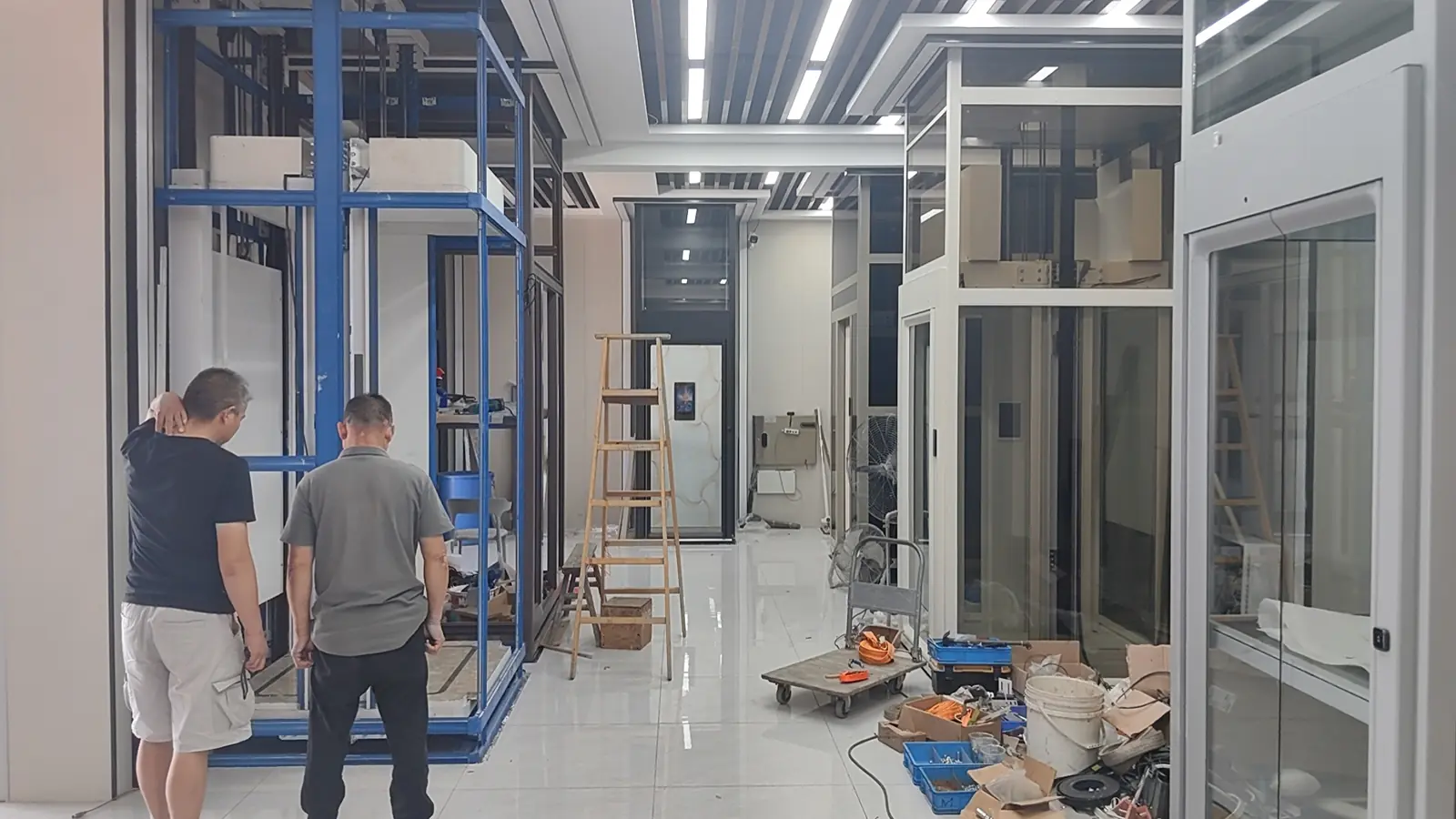
Where the components actually come from
- Zhejiang (Huzhou) and Jiangsu (Suzhou, Wujiang) — complete lifts, traction machines, door systems, and a dense component supply base. The deepest technical bench, and where most export-oriented engineering sits.
- Guangdong (Foshan, Guangzhou) — components, cabins and hardware, competitive on price and fast on delivery.
China supplies the majority of the world’s lift components — which is why elevator parts from China are the default route for modernisation projects. That is the good news. The bad news is that the same supply base also contains trading companies presenting as factories, so the licence scope and the workshop still have to be verified. The factory vetting checklist from SourceEyes is the twelve-point version, and a remote verification process now covers most of it if you cannot travel.
Interchangeability: the expensive mistake
In elevator parts from China, most “wrong part” problems are not quality problems. They are interface problems, and they are cheap to prevent:
- Electrical — supply voltage conventions (380 V, 400 V, 415 V, 220 V control circuits), frequency, and whether your site runs a generator
- Communication — CANopen, Modbus or BACnet, and the controller firmware generation the part is expected to speak to
- Mechanical — machine-room or machine-room-less layout, car sling dimensions, door width and height, door type, sheave groove and rope diameter (ropes per ISO 4344)
- Parameters — rated load and speed, travel height, stops, and stop positions
For elevator parts from China, put all of that in a one-page technical annex to the PO, with drawings. The annex costs an hour and prevents most of the return freight you would otherwise pay.
Elevator parts from China: 8 checks before you pay
- A compliance matrix, not a generic certificate — clause-by-clause, referencing documents you can read.
- Safety-component certificates for governors, safety gears, buffers and door locks, with the notified-body number where EN 81-50 applies.
- Material traceability — mill certificates with heat numbers for guide rails and structural steel, rope certificates to the relevant standard, and a stated grade rather than “high quality steel”.
- The electrical side — listed components in the controller (UL-listed for North America, CE-relevant components for Europe), appropriate enclosure rating, and conformal coating where humidity is a factor.
- Test evidence per component. Ask for the numbers that matter: door operator endurance cycles, brake torque consistency, levelling accuracy within a few millimetres, cabin noise, and braking performance at 125% of rated load. Evidence, not adjectives.
- Spares and backward compatibility. When buying elevator parts from China for modernisation work, the questions are part numbers, drawings, and whether the controller generation you already have on site is still supported. Ask for the mean-time-between-failures figure in writing.
- A factory acceptance test and a pre-shipment inspection. Agree who witnesses the FAT, and inspect before the balance moves — the SourceEyes pre-shipment inspection checklist is built for exactly this.
- Commercial terms that match reality. Parts often ship in small quantities — component MOQs of one or two pieces are normal, while discounts of 15–40% appear once quantities pass roughly a hundred units. Fix warranty terms, and agree in writing who owns a problem caused by on-site installation rather than the part.
What actually goes wrong in the field
Three failure patterns in elevator parts from China appear repeatedly:
- Rail alignment and door track tolerances, which are as much an installation question as a manufacturing one — specify the tolerance and, where possible, witness the alignment check.
- Parts that fit but do not communicate, usually discovered on site by the installer rather than at the factory.
- Documentation that does not survive a check — a certificate whose model designation does not match the part number on the packing list. That is the fastest way to have a container held.
None of the three is a price problem. All three are prevented by documentation and inspection before shipment. A single pre-shipment inspection on elevator parts from China costs far less than returning a wrong component and waiting for a replacement.
Elevator parts from China: the questions buyers ask
Do elevator parts from China come with a CE certificate?
Not automatically, and a supplier who says “CE by self-declaration” is telling you they have not done the work. Lifts require the involvement of an EU Notified Body; safety components — governors, safety gears, buffers and door locks — are certified separately from the complete lift. Ask for those certificates by component, not by factory. The applicable standards are EN 81-20:2020 for safety and EN 81-50:2014 for testing.
What certification do I need for a North American project?
ASME A17.1, as interpreted by the local Authority Having Jurisdiction. Fire service, emergency operation and seismic requirements vary by state and city, and field modification after import is normal rather than a sign of a bad supplier. Where listed components are required, ask for UL-listed items in the controller.
What is a compliance matrix, and why should I ask for one?
It is a table mapping each applicable clause of your code to the document that demonstrates compliance — clause by clause, referencing documents you can actually read. It is the single most useful signal when buying elevator parts from China, because a supplier who sends a GB certificate and calls it equivalent has not understood your project, and that shows up later in the biggest line items.
What is the minimum order for lift components?
Small. Component MOQs of one or two pieces are normal, which is what makes modernisation and breakdown orders workable. Discounts of 15–40% appear once quantities pass roughly a hundred units. Fix warranty terms, and agree in writing who owns a problem caused by on-site installation rather than by the part.
What goes wrong most often with elevator parts from China?
Three patterns repeat: rail alignment and door-track tolerances, which are as much an installation question as a manufacturing one; parts that fit but do not communicate, usually discovered on site by the installer; and documentation that does not survive a check — a certificate whose model designation does not match the part number on the packing list. None of the three is a price problem, and all three are prevented before shipment.
Where a local team changes the picture
If you are procuring elevator parts from China for a project or a modernisation programme, the value SourceEyes adds is not a cheaper part — it is that the part, the certificate and the invoice all describe the same thing before the goods leave the factory.
SourceEyes runs 2 checks on elevator parts that travel poorly: a factory acceptance test witnessed before the balance moves, and a pre-shipment inspection against the approved sample. Door operator cycles, brake torque and a 125% load test are witnessed on site.
SourceEyes is a sourcing and QC team based in Suzhou, China, inside the Yangtze River Delta lift cluster. It verifies suppliers, reviews compliance documentation, witnesses tests, inspects before shipment and photographs what it finds. You pay the factory directly, and the SourceEyes fee is agreed up front — see what a typical project covers on the SourceEyes services page, or model the landed cost with the SourceEyes import cost calculator.
Send us the part list and the destination market. SourceEyes will tell you what the China side looks like — and which items are not worth importing.
Key Takeaways: elevator parts from China
- Start with the code: EN 81-20/50 for Europe, ASME A17.1 for North America, GB for China — and ask for a compliance matrix rather than a certificate.
- Lifts require an EU Notified Body; “CE by self-declaration” is a red flag.
- Safety components are certified individually — request those certificates by component.
- Interface annex first (voltage, protocol, mechanical dimensions), then price.
- Ask for test evidence: cycles, torque, levelling, noise, braking at 125% load.
- For modernisation, confirm spares availability and backward compatibility with the controller you already run.
- Inspect before shipment, and make sure certificate, packing list and part number agree.
This article is general guidance, not a substitute for project-specific engineering. Confirm the applicable code and local acceptance requirements with your lift engineer or authority before ordering.