An import from China to Indonesia turns on four gates, not on the freight rate: an Indonesian entity that can legally declare the goods (a NIB with the right API classification), certification that must exist before the vessel sails (LARTAS, SNI, SDPPI, BPOM), a 10-digit national HS code, and duty assessed on CIF plus PPN and PPh 22.
Indonesia is not the easiest first import, and the surprises are rarely at the factory. They are on the Indonesian side: who is legally allowed to import, which certificate has to exist before the vessel sails, and how long you have before the clock turns an ordinary container into a monthly bill.
In this guide
- What makes an import from China to Indonesia different
- Who is allowed to be the importer of record
- What the goods actually cost to land
- The certificate wall: LARTAS, SNI, SDPPI, BPOM
- How to import from China to Indonesia: 7 steps
- The clock: 30 days to clear
- Five mistakes that cost money
- Key takeaways for an import from China to Indonesia
- Questions buyers ask about an import from China to Indonesia
- Where SourceEyes helps: the China half
What makes an import from China to Indonesia different
Three walls stand in the way of an import from China to Indonesia, and buyers usually hit all three in the same order: the entity wall, the certificate wall, and the clock. The entity wall is that only an Indonesian-registered business can declare the goods. The certificate wall is that several product categories must hold an Indonesian certification that cannot be bought or issued after arrival. The clock is that the goods start costing money the day they land, whether or not your paperwork is finished.
Understand those three before you place a deposit, and an import from China to Indonesia becomes an ordinary logistics project. Ignore them, and it becomes a storage dispute in a language you do not speak.
Who is allowed to be the importer of record
The first hard question in any import from China to Indonesia is who is legally allowed to declare the goods. A foreign company cannot import commercial goods into Indonesia on its own. The importer must be an Indonesian entity with a NPWP (tax identification number) and an NIB (business identification number). Since the NIB became the single business registry, the import licence is no longer a separate document — you declare your intended activity when you register through the OSS system, and the API classification is issued inside the NIB.
There are two classifications, and you can only hold one at a time:
- API-U (general importer) — for goods you intend to trade, distribute or resell
- API-P (producer importer) — for raw materials, components or machinery used in your own production
The choice is effectively permanent in one direction: moving from API-P back to API-U is not permitted. If you start as a producer importer and later decide to distribute finished goods, you may need a second entity. Get this right at registration, not after your first shipment — an import from China to Indonesia that stalls on the entity question stalls completely.
One practical check that saves a container: verify that your NIB and API status are active and synced in the CEISA customs database before the goods leave China. Registration and customs systems do not always update at the same moment, and a shipment can be refused at the port while the company itself is perfectly legitimate.
What the goods actually cost to land
Duty is the first of three layers in the landed cost of an import from China to Indonesia, and it runs from 0% to about 40% depending on the product. It is assessed on the customs value, which means the CIF figure — goods plus freight plus insurance — not the FOB price on the supplier’s invoice. Check your own heading on the ITC Market Access Map and confirm how valuation is built in the WCO guidance on customs valuation.
On top of duty come two taxes that catch out first-time importers because neither is a duty at all:
- PPN (VAT) — 11% on the import value, with an additional charge for a small list of luxury categories
- PPh 22 (income tax prepayment) — 2.5% for importers holding a valid NPWP, and a higher rate without one
That is the arithmetic of an import from China to Indonesia in practice: a quotation that looks competitive at FOB can land 25–35% higher once freight, insurance, duty, PPN and PPh 22 are stacked. That gap is exactly what the import cost calculator is for — model it before you commit to a purchase order rather than after the container berths.
Two rules decide whether you pay the high rate or a lower one:
The HS code decides your duty rate. Indonesia uses a 10-digit code under the national tariff book, and the last digits are national, not international. Your supplier’s Chinese code is a useful starting point and nothing more. Declaring a code that customs disagrees with means you pay the difference plus a penalty for misdeclaration — and, if the same code triggers a LARTAS check, a permit you have not applied for.
The certificate of origin decides your preferential rate. China and Indonesia sit inside the ASEAN–China free trade area, so a valid Form E unlocks the ACFTA rate, which on many headings is zero. As with Vietnam, the Form E has to be issued before the goods leave China. If your supplier cannot produce one, you are paying the general rate on every shipment until they learn how.
Thailand sits on the same side of the ASEAN–China framework, but the gate is a different set of certificates: TISI and NBTC rather than SNI, SDPPI and BPOM. The tariff maths transfers between the two markets, the pre-shipment approval does not, and it has to be checked country by country. The SourceEyes guide to importing from China to Thailand covers that wall in full.
The certificate wall: LARTAS, SNI, SDPPI, BPOM
Certification is where an import from China to Indonesia stops being a logistics exercise. Indonesia maintains a list of goods under LARTAS — prohibitions and restrictions — and the list is checked against your HS code in the National Single Window. If your code is flagged, you cannot complete a declaration until the relevant ministry has released the goods into the system. Practical examples:
- SNI (Indonesian National Standard) — mandatory for a defined set of categories including electrical and electronic goods, small appliances, lamps, tyres, toys and some textiles and building materials — the tile and sanitaryware standards are set out in the standards we keep in one place
- SDPPI / Postel type approval — required for anything transmitting on radio frequency, including Bluetooth and Wi-Fi devices
- BPOM registration — food, cosmetics and pharmaceuticals, in some categories alongside halal certification
- Surveyor report (LS) — used machinery and certain scrap categories, inspected before shipment in the country of origin
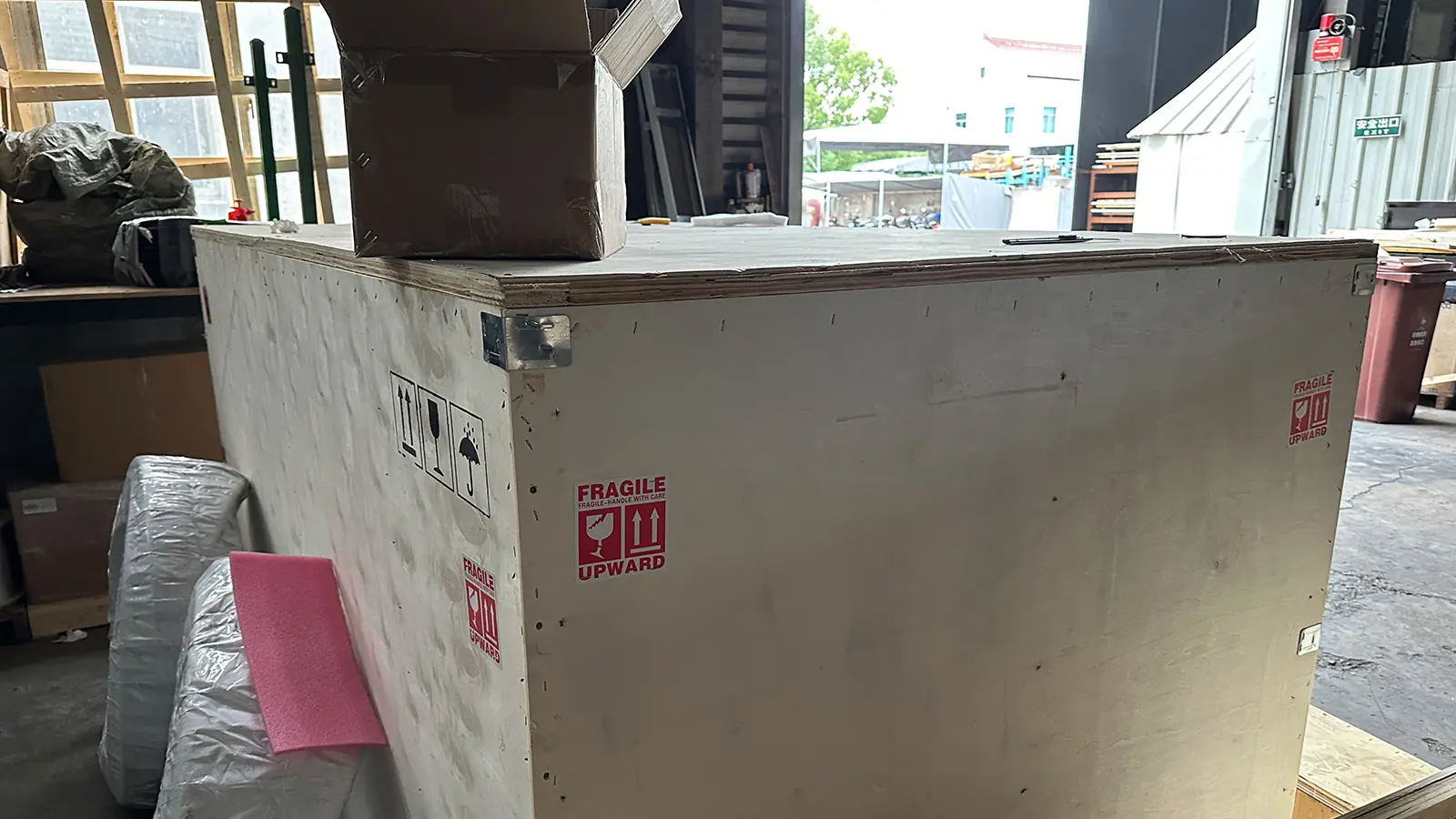
- ISPM-15 treatment — any solid-wood packing must carry the fumigation mark, or it can be held, destroyed and fined by quarantine
The critical point is timing. SNI and type approval are pre-shipment processes with lead times measured in weeks. They cannot be arranged at the port, and no customs broker can shortcut them. If your product is regulated, the certification is part of the production schedule — not a document that follows the goods.
How to import from China to Indonesia: 7 steps
- Classify the product in the Indonesian tariff. This is the first decision in any import from China to Indonesia, because the code drives duty, permits and certification. Get the 10-digit code first, then check the current LARTAS list on the Indonesian Directorate General of Customs and Excise before you order anything. Classification is the single decision that determines duty, permits and certification.
- Confirm the importing entity and its codes. NPWP issued, NIB registered with the right API classification, and the CEISA record synced. If you are using a licensed import agent, the consignment is declared in their name — confirm what that means for your invoice and your goods.
- Identify the certifications your HS code requires, and start them early. SNI, SDPPI type approval, BPOM or halal: each is a pre-shipment gate. Also confirm whether a surveyor report is required at origin.
- Fix the specification and the packing. Include the Indonesian labelling requirement — imported goods need label information in Indonesian, with importer details and country of origin — and specify ISPM-15 treated wood or a non-wood pallet solution.
- Arrange the Form E and the shipping documents before departure. Invoice, packing list and bill of lading must agree line by line: description, quantity, net and gross weight, and consignee details matching the importer of record.
- Lodge the declaration through CEISA. Your broker submits the import declaration and pays, or guarantees, the estimated duty and taxes. Customs routes the file by risk: green releases on payment, yellow reviews documents with sampling, red opens the container. This is where a mismatch between documents becomes an inspection.
- Plan the delivery before the goods land, not after. Nominate the trucking and the warehouse so the container leaves the port the day it is released. The most expensive week in an import from China to Indonesia is the week the container is sitting at the terminal while you find a truck.
The clock: 30 days to clear
Indonesian customs gives you a fixed window to clear an arrival, and it is not generous. Declarations are expected within 30 days of the goods arriving, and consignments left uncleared well beyond that are exposed to auction or destruction, with the loss falling on the importer. Storage and container rental accrue from the first day, and the free period at Indonesian terminals is short — free demurrage is measured in a few days, not weeks.
Two habits keep an import from China to Indonesia on schedule. First, request extended container free time when you book the shipment rather than asking afterwards, because detention is where the daily cost gets real. Second, have the declaration ready to lodge before arrival, so the 30-day window is spent clearing, not assembling paperwork.
Five mistakes that cost money
- Shipping before the NIB and API are active in CEISA. The company may be perfectly legal and the system still refuses the file.
- Trusting the supplier’s HS code. Indonesian classification is national; a wrong code is back-taxed duty, a penalty, and possibly a permit you never applied for.
- Leaving SNI or type approval until arrival. These certifications are issued before shipment. There is no port-side workaround.
- Declaring below the CIF value. Customs works from benchmark values, and a declared figure well under the reference triggers a review, back taxes and a fine — sometimes after release.
- Skipping the wood-packing treatment. An unmarked wooden crate is a quarantine problem: held, treated, destroyed or fined, all while your clock runs.
None of those five is a factory problem, and none of them shows up on a quotation for an import from China to Indonesia. They are all decided in China, before the container is sealed — which is why an import from China to Indonesia is best managed as a China-side discipline plus an Indonesia-side licensing project, not as one long shipment.
Key takeaways for an import from China to Indonesia
- The entity comes first in any import from China to Indonesia. NIB with the right API classification, active in CEISA, before anything ships.
- Certification is a pre-shipment gate. SNI, SDPPI and BPOM lead times belong in your production schedule, not your clearance plan.
- The 10-digit code drives everything — duty, permits, and whether the clearance plan works at all.
Every serious delay in an import from China to Indonesia traces back to one of those three, and all three are decided weeks before the vessel berths.
Questions buyers ask about an import from China to Indonesia
Who is allowed to import goods into Indonesia?
Only an Indonesian-registered entity. A foreign company cannot import commercial goods into Indonesia on its own — the importer of record needs a NPWP (tax number) and an NIB (business identification number), with the API classification recorded inside the NIB.
Can I import from China to Indonesia without an import licence?
No. Since the NIB became the single business registry, the licence is not a separate document — you declare your intended activity through the OSS system and the API class is issued with it. API-U covers goods you trade or resell; API-P covers materials and machinery for your own production. You can hold only one, and moving from API-P back to API-U is not permitted.
What is LARTAS, and how do I know if it applies to my product?
LARTAS is Indonesia’s list of prohibited and restricted goods. It is checked against your HS code in the National Single Window: if your code is flagged, the declaration cannot be completed until the relevant ministry releases the goods into the system. That is why classification comes before the purchase order, not after.
How much duty and tax will I pay?
Duty runs from 0% to about 40% depending on the product and is assessed on the CIF value — goods plus freight plus insurance, not the FOB invoice. On top of it come PPN at 11% and PPh 22 at 2.5% for importers holding a valid NPWP. In practice a competitive FOB quotation often lands 25–35% higher, which is why the certificate of origin matters: a valid Form E unlocks the ACFTA rate, zero on many headings.
How long do I have to clear the goods?
Declarations are expected within 30 days of arrival, and consignments left uncleared well beyond that are exposed to auction or destruction. Storage and container rental accrue from day one, and free demurrage at Indonesian terminals is measured in days, not weeks — request extended free time when you book, and have the declaration ready before the vessel berths.
Where SourceEyes helps: the China half
SourceEyes is a sourcing and QC team based in Suzhou, China. SourceEyes works the China side of an import from China to Indonesia: verifying that the supplier is a real factory, confirming which certifications they can actually support before production starts, controlling the specification and the packing, and inspecting the goods before they are loaded — with photographs and a written report.
For an import from China to Indonesia in a regulated category SourceEyes works the sequence in the order that matters: certification evidence first, production second, inspection third. See what that covers on the SourceEyes services page or check indicative fees on pricing; the pre-shipment inspection checklist shows what an inspection should include, and buyers running the same project into Vietnam can compare rules in the SourceEyes Vietnam import guide.
SourceEyes works an import from China to Indonesia in 3 stages, in that order: certification evidence before production starts, production follow-up, then pre-shipment inspection. The tariff maths transfers from Vietnam, but the pre-shipment approval does not.
Tell us the product and the quantity, and SourceEyes will tell you what an import from China to Indonesia looks like from the China side — including which certifications you need to start now and which can wait. Contact us and a real person replies within 24 hours.