An import from China to Thailand runs on three checks: a Thai-registered importer holding a customs card, the right certificate for your HS code, and a Form E issued before the vessel sails. Get those three right and most consignments clear in 24 to 72 hours. Miss one and the bill is demurrage, not duty.
In this guide
- What makes an import from China to Thailand different
- Who is allowed to be the importer of record
- What an import from China to Thailand costs to land
- Form E and the 45-day clock
- The certificate wall: TISI, NBTC and FDA
- How to import from China to Thailand: 7 steps
- Where an import from China to Thailand actually gets stuck
- Key takeaways for an import from China to Thailand
- Where SourceEyes helps: the China half
- Frequently asked questions
What makes an import from China to Thailand different
Thailand is a more open import market than several of its neighbours. There is no importer licence that classifies you permanently as a trader or a producer, and no long restricted-goods list that swallows ordinary consumer products. An import from China to Thailand is decided by three narrower things instead: who is legally named as the importer, whether your product needs a Thai certificate before it ships, and whether your origin paperwork reaches customs inside its validity window.
Two of those rules changed in 2026. The 1,500-baht de minimis exemption, which let small consignments enter duty-free, was withdrawn on 1 January 2026, and the inspection rate for full container loads rose from 20% to 30%. An import from China to Thailand that was routine two years ago now has far less slack in it.
Who is allowed to be the importer of record
Thai Customs does not clear commercial goods for individuals, and it does not clear them for a foreign company. Every commercial declaration names a legal importer, and for an import from China to Thailand that importer must be a Thai-registered entity — a limited company, a registered branch office, or a partnership.
Three registrations sit behind that entity, and all three matter to an import from China to Thailand:
- Tax identification number — issued with company registration
- VAT registration — required if you sell domestically or your turnover exceeds 1.8 million baht
- Customs registration — the “customs card” or paperless licence that unlocks the e-Customs system. It runs for three years and is tied to a company digital certificate used to sign declarations electronically.
Foreign ownership of a Thai trading company is normally capped at 49% under the Foreign Business Act, unless the company holds BOI promotion.
If you do not want to set up a Thai entity, the importer-of-record route exists for that case: a Thai-registered company declares the goods in its own name, pays duty and VAT, and bills you back, typically for 1–3% of shipment value plus handling. The trade-off is control — the import record, and for regulated products the licences themselves, attach to the importer of record rather than to you.
Decide that before anything else, because registration, licensing and VAT recovery all hang off who the importer is. Then confirm the customs registration is active in e-Customs before the goods leave China. A legitimate company can still have a registration that has never been wired into the declaration system, and that gap is measured in demurrage days.
What an import from China to Thailand costs to land
Duty is the first layer in the landed cost of an import from China to Thailand. Thailand classifies goods under the ASEAN Harmonised Tariff Nomenclature — an eight-digit code — and duty on that code runs from 0% to 80%: raw materials usually 0–5%, intermediate goods 5–15%, finished consumer goods 15–30%, and cars, alcohol and tobacco far higher.
VAT is charged on the CIF value plus duty, not on the supplier’s invoice alone. The base for an import from China to Thailand is therefore already larger than the price you negotiated. The working rate is 7% while the legal rate is 10%, the lower figure renewed by royal decree rather than written into the statute, so confirm the current rate before you model a landed cost. The principle behind the base is set out in the WCO guidance on customs valuation.
What changed on 1 January 2026. The de minimis exemption is gone: every import from China to Thailand valued at one baht or more now carries duty and VAT, with a combined floor of no less than 17%. Low-value goods start at a 10% duty rate, rising to 30% for apparel and footwear, 20% for bags and accessories, and 10% for electrical goods. Samples and small trial orders are no longer free to land, which matters if you test three suppliers before choosing one.
A worked example on a CIF value of 100,000 baht shows what Form E is worth:
| Without Form E | With Form E (0%) | |
|---|---|---|
| Duty | 10,000 | 0 |
| VAT (7% on CIF + duty) | 7,700 | 7,000 |
| Total | 17,700 | 7,000 |
The saving is real, but note what it is not: Form E removes duty, never VAT. A 0% duty rate still leaves 7% VAT on the CIF value. Model both lines before comparing two quotations — the import cost calculator does that arithmetic, and the gap between a quotation and a landed cost is usually where a budget gets broken.
Form E and the 45-day clock
Form E is the ACFTA preferential certificate of origin, and for an import from China to Thailand it is the single document that decides whether you pay the general rate or a preferential one. It is issued in China by the customs authorities or a CCPIT branch, and it covers goods meeting the ACFTA rules of origin — regional value content of at least 40%, a change in tariff classification, or a product-specific rule.
Two conditions trip up first-time buyers. The certificate must be requested before the goods are loaded: a Form E applied for after departure, or one whose description differs from the invoice, is not a preferential certificate. The description, quantity and HS code have to match the invoice and packing list line by line.
The deadline is the second condition, and it is the one that loses claims. A Form E is valid for submission to Thai Customs for 45 days from the date of issue, after which it is void and the consignment is assessed at the general rate. That single window costs more on an import from China to Thailand than any other deadline in the process.
The 45-day clock is a calendar problem rather than a paperwork problem, and it starts at loading in China. The certificate belongs in the loading checklist, not in a folder that follows the container across the sea.
The certificate wall: TISI, NBTC and FDA
Certification is where an import from China to Thailand stops being a logistics exercise. Thailand runs a negative-list system: most goods enter freely, but defined categories need approval from a specific agency before they can be declared.
TISI (Thai Industrial Standards Institute) catches most buyers. For an import from China to Thailand in the appliance, electrical, construction or automotive categories, its approval is compulsory before the goods can be declared. As of mid-2026 the mandatory list covers 20 product categories and 153 individual products, marked with a red TISI logo: household electrical appliances (air conditioners, refrigerators, washing machines, fans, rice cookers, kettles, hair dryers, power adapters, power banks), wires and cables, plugs and sockets, circuit breakers, LED lamps and ballasts, construction materials, automotive parts, gas appliances, food-contact plastics and children’s toys.
The list keeps growing. Hot and cold water dispensers and distribution boards became mandatory on 1 October 2025, microwave ovens follow on 30 December 2025, and the energy-efficiency standard for room air conditioners takes effect on 4 April 2026.
The process explains why TISI cannot be arranged at the port. It requires a Thai local representative, testing in a TISI-recognised laboratory (CB reports are accepted but need Thai national difference testing), and a factory quality-management audit. The certificate then runs for three years, maintained through annual surveillance including unannounced inspections and market sampling. The current product list is published on the TISI website.
The other gates are narrower but just as hard:
- NBTC — anything transmitting on radio frequency, including Bluetooth and Wi-Fi devices
- FDA Thailand — food, supplements, cosmetics, pharmaceuticals and medical devices
- DIW — hazardous chemicals and certain industrial machinery
One distinction matters in the categories SourceEyes works in: furniture and textiles fall under voluntary TISI certification, not mandatory. That changes the sequence for a furniture programme — certification is not a gate, but packing and loading still are.
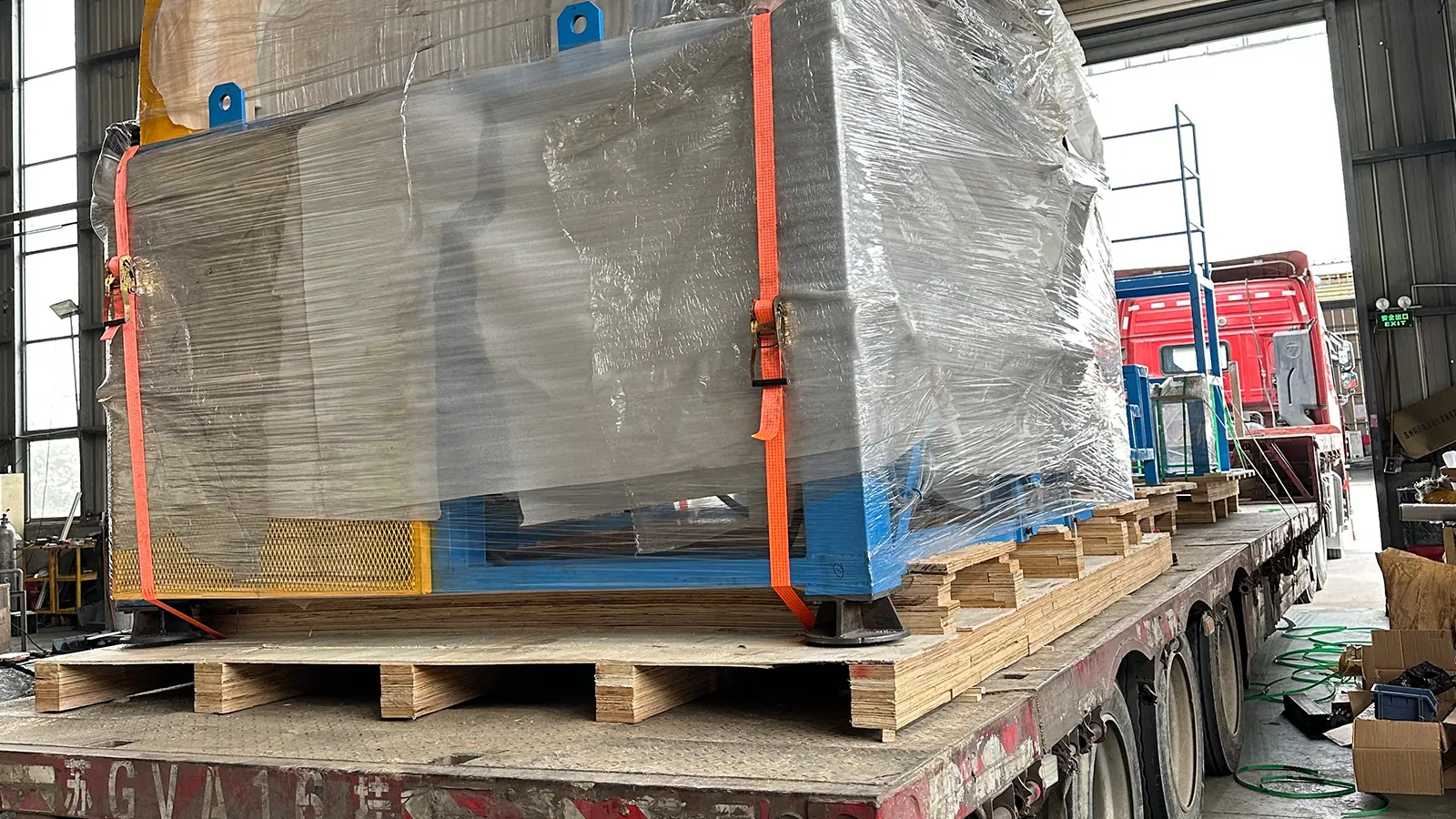
Wood packaging is a separate requirement and the cheapest one to get wrong. Solid-wood crates and pallets need ISPM-15 treatment and a fumigation mark; untreated wood can be held, treated or destroyed by quarantine while your clock runs.
How to import from China to Thailand: 7 steps
- Classify the product in the Thai tariff. The first decision in any import from China to Thailand is the eight-digit AHTN code, because it drives duty, permits and certification. Where classification is uncertain, Thai Customs will issue a binding ruling — allow roughly two weeks, so do it before you place the order. Current procedures are published by the Thai Customs Department.
- Confirm the importing entity and its codes. Company registered, tax ID issued, VAT registered where applicable, and the customs card active in e-Customs with a working digital certificate.
- Identify the certificates your HS code requires, and start them early. TISI, NBTC, FDA or DIW approvals are pre-shipment processes with lead times measured in weeks — allow 30 days or more for a permit application.
- Fix the specification and the packing. Agree labelling, carton marks and pallet type in the purchase order, and specify ISPM-15 treated wood or a non-wood pallet rather than leaving it to the factory’s default.
- Arrange the Form E and the shipping documents before departure. Request the Form E at loading — it is what decides whether your import from China to Thailand pays the general rate — then check that description, quantity, HS code and consignee match across invoice, packing list and bill of lading. Diarise the 45-day window the day it is issued.
- Lodge the declaration through e-Customs. The broker submits the declaration and pays or guarantees the assessed duty and VAT. Customs routes the file by risk: green releases on payment, yellow reviews documents with sampling, red opens the container.
- Plan the delivery before the goods land. Nominate the trucking and warehouse in advance. The main gateways — Laem Chabang, Bangkok (Klong Toey), Map Ta Phut and the Lat Krabang inland container depot — have short free-storage periods, and the most expensive week in any import from China to Thailand is the week the container sits while you look for a truck.
Where an import from China to Thailand actually gets stuck
The problems that stall an import from China to Thailand are rarely about vessel schedules. They are paperwork decisions made weeks earlier, and five of them recur:
HS classification disputes. Customs may classify your goods under a different code than you declared, raising the duty. A binding ruling taken before shipping removes the argument.
Valuation challenges. An invoice that looks low against benchmark values invites a review. Keep bank receipts proving payment and the supplier’s quotations from the same period.
A missing or mismatched Form E. No valid certificate means the full general rate on the whole consignment — the most expensive paperwork error in this trade lane.
Permits applied for too late. TISI, NBTC and FDA approvals are issued before shipment, and goods arriving without a required permit can be seized, fined or ordered re-exported.
Missing fumigation evidence. An unmarked wooden crate is a quarantine problem first and a cost problem second.
The penalties are worth knowing before you test them: duty surcharges of 1.5% per month, fines up to 200% of the unpaid tax, and criminal exposure in serious cases. If an assessment is disputed, the route is to pay under protest, appeal to the Customs Dispute Resolution Committee within 30 days, and escalate to the Tax Court within another 30.
Key takeaways for an import from China to Thailand
- The importer comes first in any import from China to Thailand: a Thai-registered entity with a customs card active in e-Customs, before anything ships.
- Form E is a deadline, not a document. It is worth up to 10% of CIF value, it must be requested at loading, and it dies 45 days after issue.
- Certification is a pre-shipment gate. TISI lead times, including a factory audit, belong in your production schedule, not your clearance plan.
- Low-value consignments are no longer free. Since 1 January 2026 every import from China to Thailand of one baht or more carries duty and VAT, with a combined floor of 17%.
Where SourceEyes helps: the China half
SourceEyes is a sourcing and QC team based in Suzhou, China. SourceEyes works the China side of an import from China to Thailand, from finding the right factory to loading your goods on board — which is where the SourceEyes scope ends. Onward freight, Thai clearance and delivery are handled on your side by your importer or forwarder, and SourceEyes hands over the documents they need.
For a Thailand programme the sequence that matters is certification evidence first, production second, inspection third. On the factory floor that means checking a claimed certificate against the original rather than a scan, confirming whether the supplier’s quality system can pass a TISI audit before you commit a volume, and agreeing the packing specification in writing.
Before loading SourceEyes inspects the finished goods against the approved sample and the specification — cartons, marks, quantities, and the document data Thai Customs will compare — and send photographs with a written report. Leown Zhang runs inspections, Quinn Sun handles supplier research and logistics coordination, and Betty Gao takes the commercial side.
SourceEyes ends the scope at loaded on board: 1 handover point, and the documents travel with the goods. Onward freight, Thai clearance and delivery stay with the buyer or the nominated forwarder, which keeps the responsibility line visible.
See what that covers on the SourceEyes services page or check indicative fees on pricing. The pre-shipment inspection checklist shows what an inspection should include, and how to choose a factory in China covers the step before it. Buyers running the same project into Indonesia can compare rules in the SourceEyes Indonesia import guide.
Pakistan runs on a different mechanism again. The binding constraint there is documentary: a Form P certificate of origin claimed before loading, and a bank instrument lodged in the national single window before the container is discharged. Missing either does not merely delay clearance — it changes the duty rate. The sequence is set out in our Pakistan import guide.
Tell us the product and the quantity, and SourceEyes will tell you what an import from China to Thailand looks like from the China side — including which certifications have to start now. Contact us and a real person replies within 24 hours.
Frequently asked questions
Do I need a Thai company for an import from China to Thailand?
For commercial consignments, yes. The declaration must name a Thai-registered importer with a customs card active in e-Customs. Without a Thai entity, an importer-of-record service can declare in its own name, typically for 1–3% of shipment value plus handling.
Can I use Form E for every product in an import from China to Thailand?
No. Form E only gives a preferential rate when the HS code is covered by the ACFTA concession list and the goods meet the rules of origin, such as 40% regional value content. It must also be requested before loading and submitted within 45 days of issue.
How long does customs clearance take in Thailand?
Cleared files are usually processed within 24 to 72 hours. The variable is not customs speed but whether your declaration is complete — a missing permit or a mismatched certificate of origin turns a two-day clearance into a storage dispute.
Does a Form E mean I pay no tax?
No. Form E can reduce duty to 0%, but VAT is still charged at 7% on the CIF value plus duty. On a 100,000-baht CIF shipment, duty falls from 10,000 baht to zero while VAT only drops from 7,700 to 7,000.
What happens if I ship before my TISI certificate is issued?
The goods cannot be lawfully declared in that product category. TISI requires testing plus a factory audit, so the realistic options are to delay the shipment or to clear under a different, non-regulated code — which is a misdeclaration risk, not a workaround.