An import from China to Sri Lanka runs with no free trade agreement behind it. The two governments negotiated one; it has never entered into force. What exists instead is APTA — a positive list covering a fraction of tariff lines, and one that reduces a single levy out of the seven an import from China to Sri Lanka pays.
In this guide
- There is no China-Sri Lanka FTA in force
- What APTA cuts, and what it leaves untouched
- Seven levies stack up on an import from China to Sri Lanka
- SLSI import inspection: 122 products, and building materials are on the list
- Import controls that single out building materials
- How to import from China to Sri Lanka: 7 steps
- Where an import from China to Sri Lanka gets stuck
- Key takeaways
- Where SourceEyes helps: the China half
- Frequently asked questions
There is no China-Sri Lanka FTA in force
Start with the fact most buyers get wrong. There is no bilateral free trade agreement between China and Sri Lanka in effect. An agreement has been negotiated, but it has not entered into force, and nothing on an import from China to Sri Lanka in 2026 turns on it.
The practical consequence for an import from China to Sri Lanka is that no document exists which converts Chinese origin into a blanket preferential rate. Compare the neighbourhood. Sri Lanka’s Department of Commerce lists free trade agreements with India, Pakistan and Singapore, plus the regional APTA and SAFTA arrangements — and no bilateral agreement with China.
That single fact reorganises the whole cost model of an import from China to Sri Lanka. On a lane with an FTA, a certificate of origin is the centre of gravity: get the paperwork right and the duty line collapses. Here it does not. The only preferential route is APTA, and APTA is narrower than most buyers assume.
What APTA cuts, and what it leaves untouched
APTA — the Asia-Pacific Trade Agreement, in force since 2006 and built on the 1975 Bangkok Agreement — is a partial-scope preferential agreement. It works on positive lists: each member offers concessions on a named list of products, not on everything.
Under the fourth round, effective 1 July 2018, more than 10,000 tariff lines are covered across the membership. The two lists that matter for an import from China to Sri Lanka are asymmetric:
- China’s offer to Sri Lanka — 2,191 products, with an average margin of preference of 33.09%
- Sri Lanka’s offer to China — 568 products, with an average margin of preference of 22.06%
The margin of preference is the percentage of the normal duty that is given up. A 33% margin on a 15% customs duty leaves roughly 10% — not zero. That distinction is where an import from China to Sri Lanka usually goes wrong in a quotation model.
Origin rules add a second filter to an import from China to Sri Lanka. APTA grants preference on wholly obtained goods, on goods meeting a general value-added test — 45% domestic value addition — or on goods meeting the cumulative rule, where 60% of regional aggregate content comes from APTA members. A Chinese supplier that assembles from imported components may still qualify through the cumulative rule, and one that simply buys and re-exports will not.
Then the part that surprises buyers most. APTA preference applies to the customs duty component only. Every other levy on this lane — and there are several — is charged at the full standard rate regardless of where the goods were made. A preferential certificate on an import from China to Sri Lanka does not reduce VAT, the ports levy, the social security levy or the cess.
The Department of Commerce publishes the concession lists and the origin rules on its APTA page.
Seven levies stack up on an import from China to Sri Lanka
Sri Lanka charges an import from China to Sri Lanka through a layered structure, and each layer uses a different base. The order matters, because the later layers are computed on the running total rather than on the invoice value.
| # | Levy | Base | Notes |
|---|---|---|---|
| 1 | Customs Import Duty (CID) | Transaction value | Three-tier structure: 0 / 10 / 15% |
| 2 | CESS (EDB levy) | CIF | Export Development Board levy, varies by tariff line |
| 3 | Ports & Airports Levy (PAL) | CIF | Rate fixed per line; standard and concessionary bands |
| 4 | Excise / Special Provisions Duty | Varies | Only for listed categories |
| 5 | Special Commodity Levy (SCL) | Varies | Narrow — fuels, rice, wheat, sugar |
| 6 | Social Security Contribution Levy (SSCL) | CIF + CID + CESS + PAL | 2.5%, Act No. 25 of 2022 |
| 7 | Value Added Tax (VAT) | CIF + CID + CESS + PAL + SSCL | 18%, charged last |
Two structural points carry most of the cost. First, VAT has not always been 18%; the rate rose from 15% to 18% at the start of 2024 under the IMF-supported stabilisation programme, and the increase moved every landed cost on this lane. Second, because SSCL and VAT are computed on cumulative bases, the layers behind them are not additive in the way a spreadsheet assumes.
A worked sketch makes the shape clear. Take a CIF value of $50,000 with a 15% customs duty and no APTA claim, then a CESS at 15% and PAL at 7.5%:
| Line | Basis | Amount |
|---|---|---|
| CIF value | — | 50,000 |
| Customs Import Duty @ 15% | CIF | 7,500 |
| CESS @ 15% | CIF | 7,500 |
| PAL @ 7.5% | CIF | 3,750 |
| SSCL @ 2.5% | CIF + CID + CESS + PAL = 68,750 | 1,719 |
| VAT @ 18% | 70,469 | 12,684 |
| Total levies | 33,153 |
Now apply APTA at a 33% margin on the duty line. Duty falls from 7,500 to about 5,025 — a saving of roughly 2,475, or about 7.5% of the total levy bill. The remaining six layers do not move.
SourceEyes checks three things before an import from China to Sri Lanka moves: the HS line against the APTA concession list, the certificate type against the SLSI scheme, and the invoice against the packing list. All three are settled in China, before the container sails.
That arithmetic is the whole argument for building an import from China to Sri Lanka cost model from the levy stack rather than from the duty rate. The import cost calculator runs the layered version, and it is the difference between a quotation and a landed cost.
Duty rates and levy bands on an import from China to Sri Lanka change by gazette notification rather than by legislation, so a rate confirmed last quarter is not evidence of this quarter’s rate. The current schedule sits with Sri Lanka Customs.
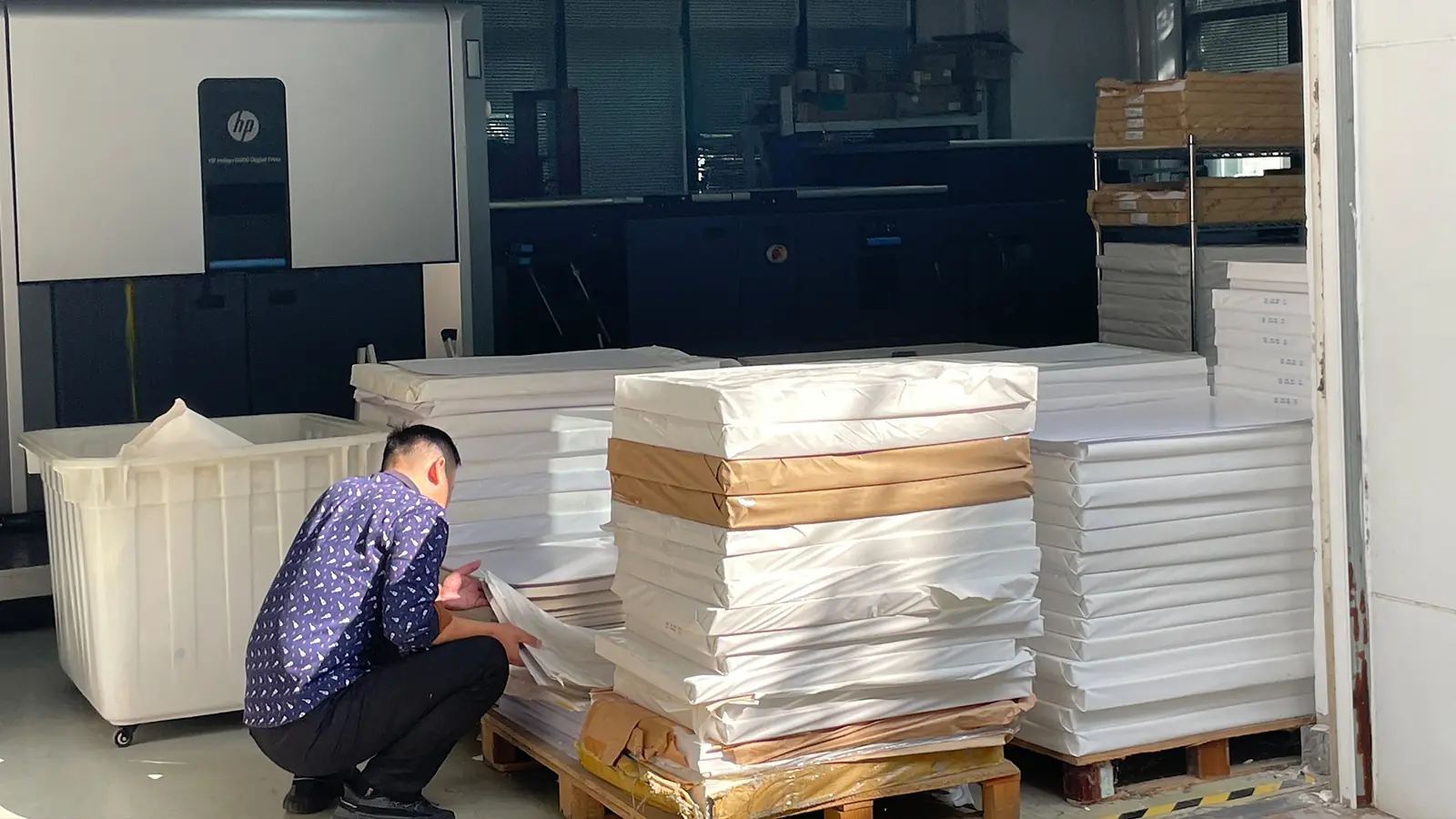
SLSI import inspection: 122 products, and building materials are on the list
Before any of that arithmetic applies, an import from China to Sri Lanka has to clear the conformity gate. Sri Lanka runs a compulsory import inspection scheme through the Sri Lanka Standards Institution, and it is not a formality.
The scheme covers 122 designated products, published in Gazette Notification No. 2064/34 of 29 March 2018 under the Imports and Exports Control Act No. 1 of 1969. The list reaches into several categories a sourcing buyer meets constantly: cement, steel reinforcement, PVC pipes, ceramic tiles, electrical cables and switches, circuit breakers, LED lamps, batteries, tyres and helmets.
Consignments on an import from China to Sri Lanka clear through one of five conformity routes. Four of them avoid port testing: a conformity certificate from a laboratory accredited in the exporting country, a certificate from that country’s national standards body, goods from a manufacturing plant already registered with SLSI, or goods carrying a recognised product certification mark whose underlying standard is compatible with the Sri Lankan one.
The fifth route is the expensive one. A consignment that fits none of the four is sampled at the port, and it is not released until the test report is available. On an import from China to Sri Lanka, that is a demurrage clock running against a container that has already arrived.
Three details decide whether the gate opens smoothly:
The importer registers, not the factory. A foreign manufacturer does not apply to SLSI in its own name for consignment clearance; the Sri Lankan importer registers the goods and lodges the documents and test certificates. A supplier promising to “handle SLSI” is describing something it cannot do alone.
A foreign plant can be registered — at a price. SLSI operates a product certification scheme for foreign manufacturers, and it requires ISO 9001 certification of the manufacturing plant, an on-site assessment by SLSI auditors, product sampling and periodic surveillance. It is worth doing for a programme running monthly; it is not worth doing for one container.
Test certificates must be to the Sri Lankan standard. Certificates issued against an equivalent international or recognised national standard are accepted where compatible, but a supplier’s in-house test report is not a conformity certificate. Where a national standard deviates from the Sri Lankan one, a test report against the specific requirement is what settles it.
The scope and the routes are set out on the SLSI import inspection page.
Import controls that single out building materials
Behind the standards scheme sits a second filter, and it catches the same categories from a different direction. Sri Lanka’s import control regulations maintain schedules of items subject to licensing, and the 2020 regulations list building materials prominently.
Among the items that stay restricted even for Board of Investment-approved projects are cement, steel reinforcement, plywood, ceramic and porcelain wall and floor tiles, marble floor tiles, granite and quartz tiles, sanitary ware and fittings, paints, PVC pipes, and wall finishing material. For an import from China to Sri Lanka in the building-materials category, that means the product can be inside the SLSI list, inside the import control schedule, or both — and the two are separate processes with separate papers.
The practical implication is a question to settle before the order, not at the port: which of the two applies to your exact HS line, who files it, and what the importer needs from the supplier to file it. A classification opinion taken before production is cheap; a classification argument on arrival is not.
Imports are also governed by the Foreign Exchange Act No. 12 of 2017, and payment routes run through the banking system rather than ad hoc. Where a buyer is funding an import from China to Sri Lanka through a local entity, the payment structure is worth agreeing at the contract stage alongside the commercial terms — the payment terms guide covers how the risk splits between T/T and documentary routes.
How to import from China to Sri Lanka: 7 steps
- Classify the product and check both lists. The HS line drives the CID band, the CESS and PAL columns, and whether the product sits on the SLSI designated list or in the import control schedule. Do this before you commit to a supplier, because an import from China to Sri Lanka in a controlled line has a longer runway.
- Confirm whether APTA actually covers your line. Preference applies only where the product appears on the concession list and meets the origin rules. Ask the supplier which certificate it can obtain and from which issuing body, and treat “we can do it” as unverified until the certificate type is named.
- Agree who is the importer of record. Commercial imports are declared against a Sri Lankan entity, and the SLSI registration is that entity’s. Where you do not hold a local company, the importer-of-record route works — with the same trade-off as anywhere: the import record and the licences attach to the entity that declares.
- Put the conformity route in writing before production. Specify which of the five routes the consignment will use, and who issues the certificate. On a controlled line this is the decision that removes port sampling.
- Match the documents before the vessel sails. Invoice, packing list, bill of lading and certificate of origin must agree line by line — description, quantity, HS code. A description that drifts between the invoice and the certificate is found at Colombo, and it is paid for in storage.
- File the declaration and clear. Documentation for an import from China to Sri Lanka is lodged through Sri Lanka Customs and assessed in one pass. Where the consignment falls to sampling, plan for release after the test report rather than on arrival.
- Fix free time and inland delivery in advance. Terminal free time and haulage are negotiated before sailing, not after arrival, and the clearing agent should be nominated while the container is still on the water.
Where an import from China to Sri Lanka gets stuck
The recurring failures on an import from China to Sri Lanka are not at sea. Five of them account for most of the cost, and each is decided before the goods move.
A supplier that assumed a free trade agreement. Every so often an import from China to Sri Lanka is quoted at APTA rates on a tariff line that is not on the concession list, or with a certificate that never arrives. The duty reverts to the standard band, and the quotation was wrong from the start.
A consignment that falls to Category 5. Without an acceptable conformity certificate, the container is sampled at the port and held until the report exists. That is the single largest avoidable cost on the lane, and it is avoidable by choosing the conformity route in advance.
On the China side, SourceEyes works to the 33.09% average APTA preference rather than assuming duty-free entry: the concession list is checked line by line, and a rate is only quoted once the HS code is confirmed.
A certificate naming the wrong entity. A certificate of origin issued by, or an invoice raised from, an offshore trading company rather than the mainland manufacturer is a document that does not support the claim it was bought for. It is agreed at the quotation stage or not at all.
A licence nobody applied for. Building materials sit inside the import control schedule, and that obligation attaches to the importer. Discovering it after the container is on the water leaves the goods waiting on a licence the buyer never knew it needed.
A landed-cost model built on the duty rate. Because six of the seven levies ignore origin entirely, an import from China to Sri Lanka modelled on “duty plus VAT” is short by the cess, the ports levy and the social security levy. The gap is usually larger than the freight.
Key takeaways
- No FTA is in force. An import from China to Sri Lanka has no bilateral preferential arrangement to lean on; APTA is the only route, and it is a positive list.
- APTA cuts one layer out of seven. Preference applies to the customs duty component; CESS, PAL, SSCL and VAT are charged in full regardless of origin.
- The old China APTA offer is narrow. China’s concession list to Sri Lanka covers 2,191 products at a 33.09% average preference — a reduction, not an exemption.
- Check both lists before the order. The SLSI designated list (122 products) and the import control schedule both reach building materials, ceramics and steel.
- Category 5 is the cost that repeats. A consignment with no acceptable conformity certificate is sampled at the port and released only after testing.
Where SourceEyes helps: the China half
SourceEyes is a sourcing and QC team based in Suzhou, China, working the China side of an import from China to Sri Lanka, from finding the right factory to loading your goods on board — which is where the scope ends. Sri Lankan duty, licensing, SLSI registration and clearance are handled by your importer or clearing agent, and SourceEyes hands over the documents they need.
Three things on an import from China to Sri Lanka are settled on the SourceEyes side of the water.
The first is APTA eligibility: SourceEyes identifies the HS line and checks it against the concession list before the order is placed, so a preferential rate is never assumed into a quotation. The second is the conformity route: test reports and certificates are matched to the standard the Sri Lankan scheme requires, and SourceEyes says plainly which of the five routes a consignment can use. The third is document consistency — invoice, packing list, certificate of origin and shipping marks verified against each other, so the file survives comparison at Colombo.
Before loading SourceEyes inspects the finished goods against the approved sample and the specification: quantities, cartons, shipping marks and the data customs will match, inspected against the ISO 2859-1 sampling standard, with photographs and a written report. Leown Zhang runs inspections, Quinn Sun handles supplier research and logistics coordination, and Betty Gao takes the commercial side.
See what that covers on the SourceEyes services page or check indicative fees on pricing. The pre-shipment inspection checklist shows what an inspection should include, and how to choose a factory in China covers the step before it. Buyers running parallel programmes compare the Pakistan guide — which turns on a Form P certificate under a free trade agreement, the opposite situation to this one — the Bangladesh guide and the Thailand guide where Form E applies. Contract risk sits in the payment terms that decide who carries it.
Tell us the product, the quantity and the destination, and SourceEyes will tell you what an import from China to Sri Lanka looks like from the China side — including whether your tariff line is on the APTA concession list at all. Contact us and a real person replies within 24 hours.
Frequently asked questions
Does Sri Lanka have a free trade agreement with China?
No bilateral agreement is in force. An agreement has been negotiated but has not entered into effect, so no 2026 shipment can claim a rate under it. What applies instead is APTA, a partial-scope preferential agreement that operates on positive lists and reduces only the customs duty component of the levy stack.
Is APTA the same as a free trade agreement for an import from China to Sri Lanka?
It is a preferential agreement, not a free trade agreement, and the difference is commercial. APTA concessions cover a named list of products rather than all trade, and China’s list for Sri Lanka carries an average margin of preference of 33.09%. Duty is reduced on covered lines, not eliminated, and the other six levies are unaffected.
What taxes apply to an import from China to Sri Lanka?
Up to seven layers: Customs Import Duty, CESS, the Ports and Airports Levy, excise or special provisions duty where applicable, the Special Commodity Levy on a narrow list, the Social Security Contribution Levy at 2.5%, and VAT at 18%. SSCL and VAT are computed on cumulative bases, so the effective rate is materially higher than the headline figures suggest.
Do ceramic tiles and building materials need SLSI certification to enter Sri Lanka?
They are on the designated list under the compulsory import inspection scheme, which covers 122 products, and building materials also appear in the import control schedule. The Sri Lankan importer registers the goods and lodges the conformity certificate for each consignment. Without an acceptable certificate the consignment is sampled at the port and released only after testing.
How do I claim APTA preference on an import from China to Sri Lanka?
Three conditions have to hold: the product must be on the concession list, it must satisfy the APTA rules of origin — 45% domestic value addition under the general rule, or 60% regional aggregate content under the cumulative rule — and the consignment must be supported by a certificate of origin issued by the authorised body in the exporting country. Without all three, the standard rate applies.